
_.jpg)
AI video tagging is now essential in sports broadcasting. Every match creates large amounts of video. Over time, those files grow into huge archives. Finding one key moment inside that archive becomes difficult.
Because content volume keeps rising, manual tagging no longer works. Editors cannot label everything by hand. As a result, broadcasters need systems that work automatically and in real time.
Today, speed matters as much as quality. Therefore, tagging must happen instantly.
The Growing Content Challenge in Sports Media
Sports production has changed dramatically. In the past, highlights were created after the match. Teams had time to review footage. Audiences were willing to wait.
Now, things move faster.
Fans expect clips while the game is still live. Social platforms react within seconds. Broadcasters compete for attention. If content appears late, engagement drops.
At the same time, multiple matches may run at once. Editors cannot watch every feed. Consequently, manual workflows become stressful and slow.
Because of this pressure, traditional tagging systems break down.
Why Manual Tagging Slows Everything Down
Manual tagging depends on human effort. An editor watches the video. Then they add labels for goals, assists, or other actions.
This process takes time. Moreover, it does not scale well.
When content volume increases, tagging falls behind. As tagging falls behind, search becomes harder. When search becomes harder, editing slows down.
Eventually, the entire workflow feels heavy. Therefore, automation becomes necessary.
How AI Video Tagging Works in Real Time
AI video tagging uses machine learning to scan video automatically. The system analyzes frames and detects patterns. It identifies players, actions, and match events.
For example, during a football match, the platform can detect:
Goals
Assists
Fouls
Substitutions
Match timestamps
Because tagging happens instantly, clips become searchable right away. Editors do not scrub through timelines. Instead, they type a keyword and find the moment quickly.
As a result, production speed improves immediately.
Smarter Search With Video Finder Tools
Once footage is structured, search becomes simple. A video finder allows editors to search by player or event.
In addition, video search by video lets teams upload a sample clip. The system then finds similar moments across the archive. This saves time during highlight creation.
Likewise, video to video search helps compare plays between matches. Therefore, editors build content faster and with better context.
Because search improves, output increases.
Why Sports Video Editing Software Depends on Tagging
Modern sports video editing software must work fast. Without organized footage, editors lose time.
When tagging is automatic, important moments are already marked. Consequently, editing becomes smoother. This also supports automated sports highlights, since the system detects key plays early.
Instead of searching for clips, editors focus on storytelling. Therefore, creative work improves.
Media Automation Creates Connected Workflows
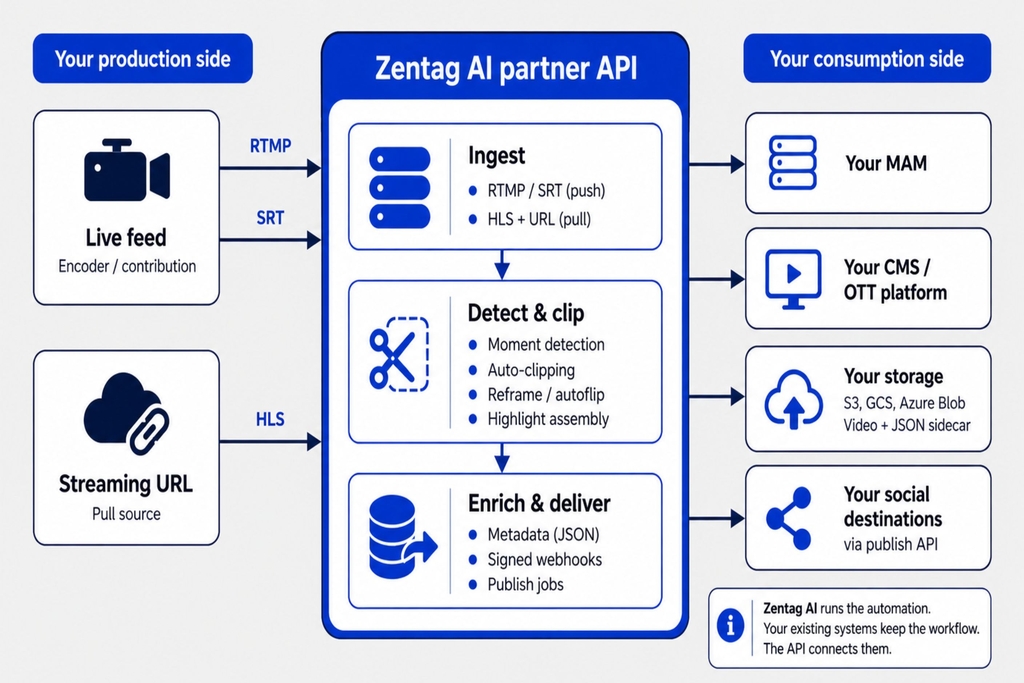
Tagging works best inside a full media automation system. Instead of separate tools, everything connects.
For example, when a goal is detected:
The system tags the event.
A clip is created.
The clip moves into editing.
The final version is prepared for video distribution.
Because these steps link together, delays decrease. In addition, consistency improves across platforms.
Cloud Video Production Supports Scalability
Modern sports teams operate from many locations. Therefore, cloud video production is critical.
When tagging runs in the cloud, footage becomes searchable from anywhere. Remote editors can work without delay. Producers can review clips instantly.
At the same time, connected systems speed up publishing. As a result, operations scale smoothly during busy events.
Faster Publishing Improves Sports Fan Engagement
Speed directly impacts sports fan engagement. When highlights appear quickly, fans respond faster.
For instance, tagged footage allows teams to publish a goal within minutes. Social teams react to trending moments instantly. Because timing improves, engagement increases.
Without structured tagging, this speed would not be possible.
How Zentag AI Brings Everything Together
Platforms like Zentag AI combine tagging with automated workflows.
Instead of switching between tools, teams work inside one connected system. Tagging, clipping, and publishing happen in sequence.
Zentag AI supports:
Intelligent tagging
Automated sports highlights
Media automation
Cloud video production
Video distribution
Because every step connects, production becomes faster and more stable.
Operational Benefits for Broadcasters
When intelligent tagging is part of daily operations, improvements appear quickly.
Editors retrieve content faster. Archives stay organized. Production cycles shorten. Teams handle more matches without burnout.
Most importantly, stress levels drop. Creative teams spend more time shaping stories instead of searching files.
Why AI Video Tagging Matters for the Future
Sports media will continue expanding. More matches stream globally. More platforms require content. Expectations for speed will keep rising.
Manual systems cannot support this growth. Therefore, AI video tagging provides the structure needed for scale.
Broadcasters who adopt intelligent workflows today will remain competitive tomorrow.
The Broader Shift Toward Smarter Systems
Sports broadcasting is moving toward connected systems. Automation handles repetitive work. Humans focus on strategy and creativity.
This balance improves efficiency. It also improves quality.
Because tagging forms the base of organized content, it remains central to future workflows.
Conclusion
AI video tagging is no longer optional. It is necessary for modern sports broadcasting.
By organizing footage instantly and connecting to media automation systems, intelligent tagging speeds up search, editing, and video distribution.
With platforms like Zentag AI, broadcasters move from manual effort to scalable workflows. As sports content grows, structured and searchable video will define long-term success.
Read More: Cloud Video Production for Sports | Zentag AI Sports Video Platform
Visit: Home Page