
The Content Gap Between Top-Tier and Everyone Else
A Premier League club has a content team of 20 to 50 people producing highlights, social clips, behind-the-scenes footage and branded content across every platform. A second-division handball league in Central Europe might have one person managing a social media account in their spare time. The gap between these two realities is not a difference of degree. It is a structural divide that determines whether fans see their team's biggest moments or not.
This divide exists because traditional highlight production scales with money and headcount. Every match that receives coverage requires an editor watching the feed, identifying moments, cutting clips, adding branding and publishing. At $40 to $80 per hour for a skilled editor, covering a single match costs $80 to $160 in editing labor alone. A league with 10 teams playing 18 matchdays generates 90 matches per season. Full highlight coverage at manual production rates costs $7,200 to $14,400 per season in editing labor, before accounting for camera operators, equipment, software licenses or distribution infrastructure.
For a regional volleyball federation, a women's basketball league or a national futsal competition, that budget simply does not exist. The result is predictable: these organizations produce little or no video content. Their matches happen, fans who attended remember them and everyone else never sees what they missed.
The irony is that mid-tier sports often produce the most emotionally compelling content. A local derby in a second-division football league generates intensity that rivals any top-flight fixture. A national championship final in a niche sport delivers drama that would captivate audiences if they could see it. The content value is there. The production infrastructure to capture and distribute it is not.
What Mid-Tier Leagues Lose Without Highlight Coverage
The absence of highlights is not just a content problem. It is a business problem that compounds over time.
Fan growth stalls. Highlights are the primary discovery mechanism for sports audiences. A casual viewer who sees a spectacular goal from a second-division match on social media becomes curious. Curiosity leads to following the league, attending a match, purchasing a streaming subscription. Without highlights, this discovery loop never starts. The league's audience remains limited to people who already know about it.
Sponsorship value decreases. Sponsors pay for visibility. A sponsor's logo on a jersey that is never seen on video is worth significantly less than one that appears in highlight clips distributed across social media. When a league cannot provide video content featuring sponsor branding, the sponsorship packages they can sell are limited to in-stadium signage and print media. This directly reduces the revenue available for league operations and development.
Player development goes unnoticed. Scouts increasingly rely on video to identify talent. A promising player in a league without video coverage is functionally invisible to the broader football ecosystem. This hurts the player's career prospects and the league's reputation as a talent pipeline, which in turn reduces the league's attractiveness to ambitious young players.
Broadcast and streaming rights have no foundation. A league looking to sell broadcast or OTT streaming rights needs to demonstrate content value. Without a library of highlights showing the quality of competition and the engagement potential, rights negotiations start from zero. Leagues that already produce and distribute highlights can point to viewership data, social engagement metrics and audience demographics. Leagues without content have nothing to show.
How AI Removes the Production Cost Barrier
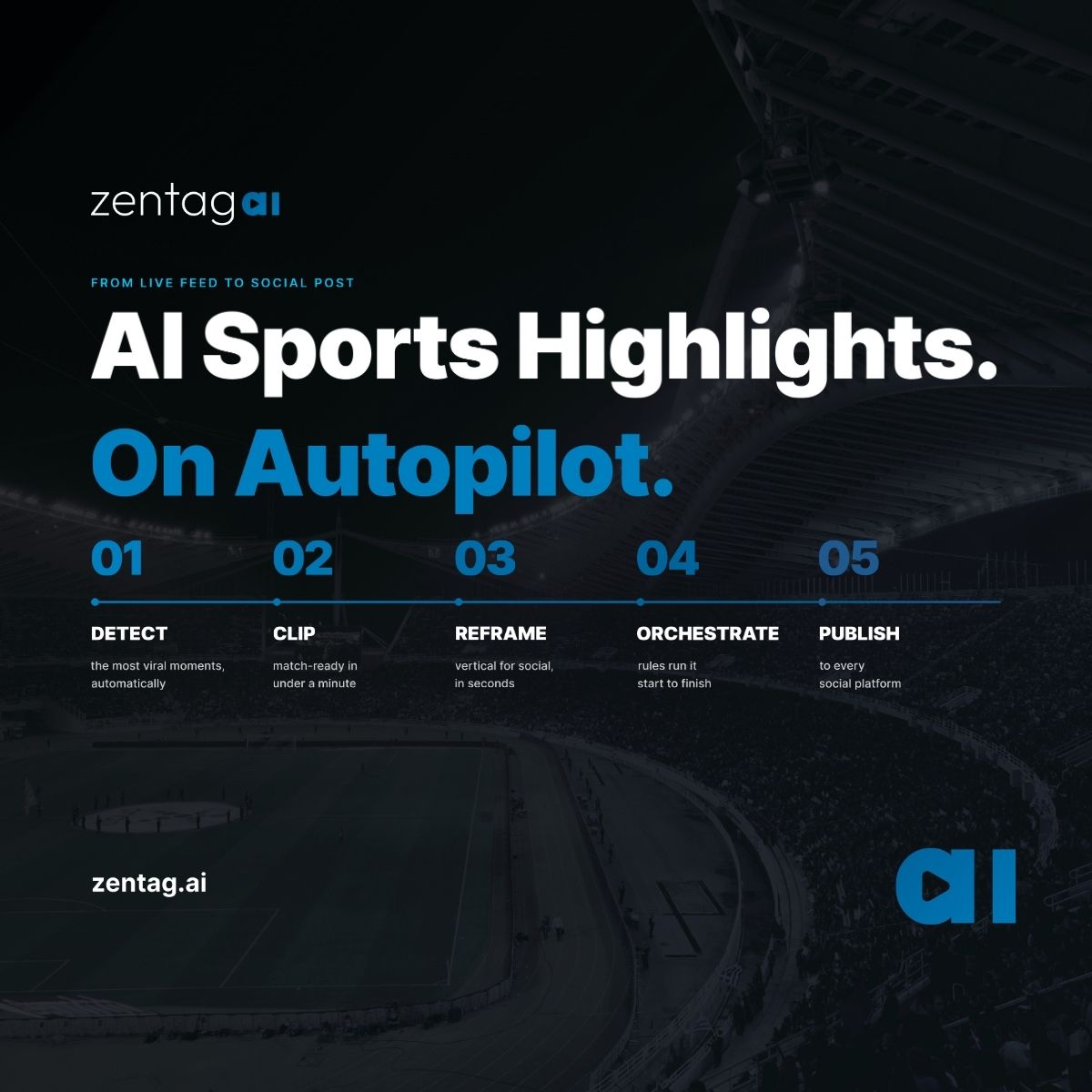
AI-powered highlight automation fundamentally changes the economics by eliminating the per-match production overhead. Instead of hiring editors for every match, the league connects their camera feeds to an AI platform that handles detection, clipping, branding and distribution automatically.
Zero-Configuration Ingest
Mid-tier leagues rarely have dedicated broadcast infrastructure. They might have a single camera operator using a prosumer camera, a smartphone-based multi-camera setup or an IP camera installed in the venue. The AI platform needs to accept whatever feed the league can provide without requiring expensive encoding hardware or specialist technical staff. At Zentag AI, ingest works via standard protocols (RTMP, HLS) as well as direct file uploads. Connect the feed and the system starts processing. No per-sport configuration, no per-venue setup, no specialist required.
Automated Detection Across All Sports
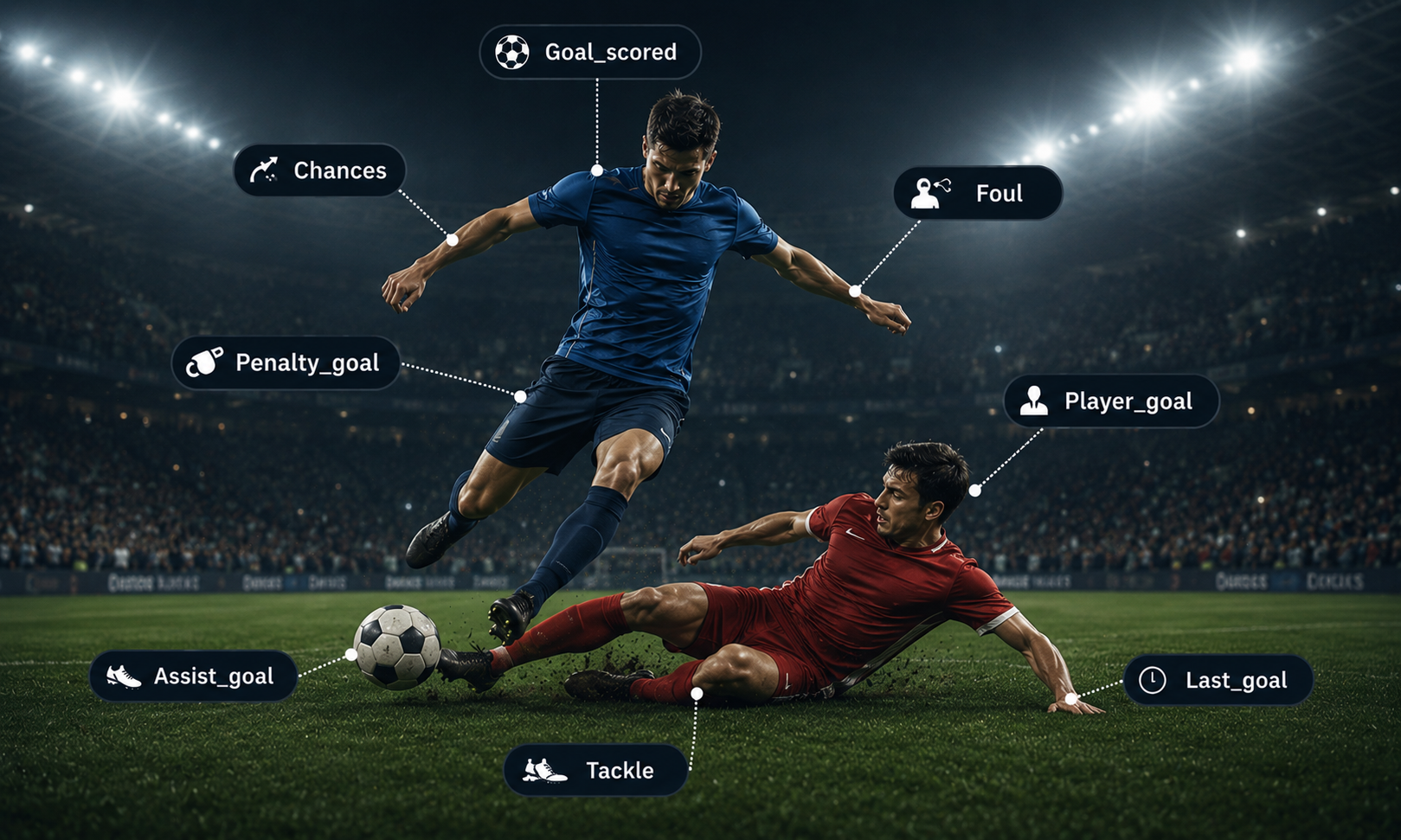
This is where multi-sport capability becomes critical. A national sports federation might oversee football, basketball, handball, volleyball and futsal under a single umbrella. A platform that only handles football leaves the other sports uncovered. Zentag AI supports 50+ sports because the multi-dimensional detection (computer vision, audio analysis, game context) adapts per sport rather than relying on sport-specific hard-coded models. A volleyball spike, a futsal goal, a handball fast break and a basketball three-pointer are all detected using the same underlying architecture tuned to each sport's patterns.
Branding That Makes Small Leagues Look Professional
One of the most underestimated aspects of highlight automation is the branding layer. When a second-division league publishes a highlight clip with professional overlays, score bugs, team logos and consistent visual identity, it signals legitimacy. The content looks like it came from an established media operation rather than a volunteer with a laptop. This perception shift matters for sponsorship conversations, broadcast negotiations and fan credibility.
The AI applies configured branding elements to every clip automatically. Set it once and every highlight from every match across the entire season maintains the same visual standard. For leagues managing multiple competitions or divisions, this consistency is impossible to achieve with manual production where different editors apply different styles.
Multi-Format Output for Social Distribution
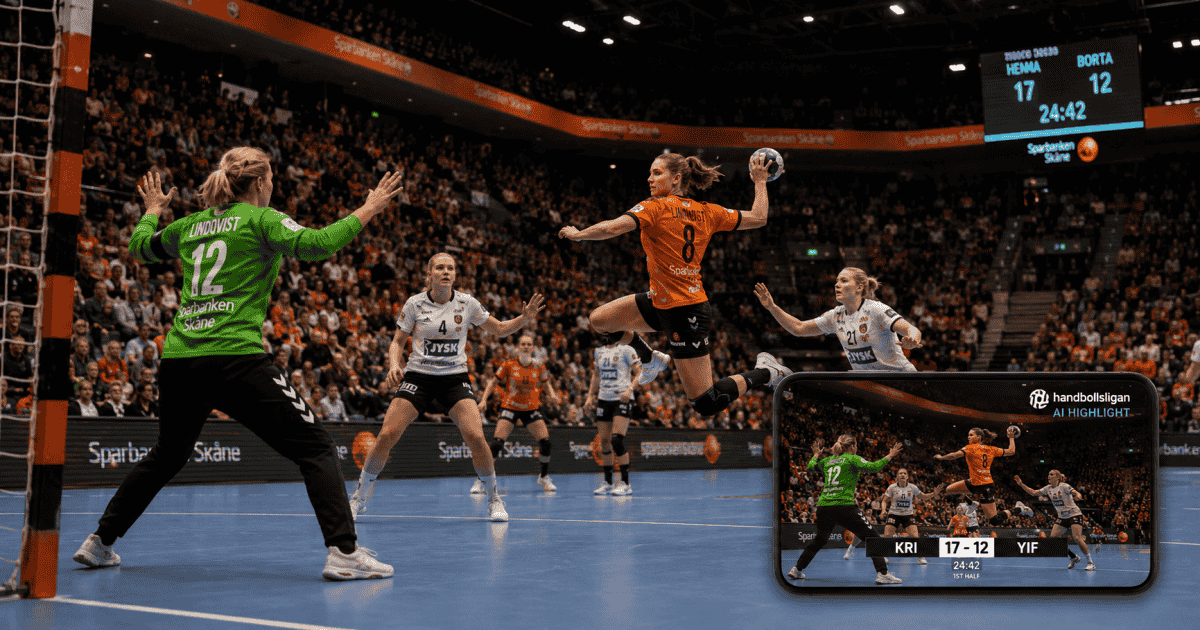
Mid-tier leagues live and die on social media. Their audience is not watching on television. They are scrolling Instagram, TikTok and YouTube. Every highlight needs to exist in vertical 9:16 format as well as horizontal 16:9. AI Reframe handles this conversion automatically from a single source clip. The league publishes to every platform from one processing pass without re-editing.
The Real Cost Comparison: Manual vs. AI Production
Let us run the numbers for a realistic mid-tier league scenario.
League profile: 12 teams, 22 matchdays, 132 matches per season. Currently producing zero highlight content because the budget is not there.
Manual production cost to cover all matches: One freelance editor per match at $60/hour, spending 1.5 hours per match (watching, clipping, branding, exporting). That is $90 per match, $11,880 per season. This produces 8 to 12 clips per match in a single format (horizontal only). Adding vertical format versions for social media doubles the editing time, pushing the cost toward $20,000 per season. And this assumes the league can find, schedule and manage 132 freelance editing sessions across the season.
AI-automated production: The platform processes every match automatically. It detects 15 to 25 significant moments per match (higher volume than manual editing), produces branded clips in both horizontal and vertical formats and delivers them within seconds of the on-field action. The league needs one person to review and approve clips, not one editor per match to produce them.
The cost difference is significant. But the more important difference is what becomes possible. Under the manual model, covering 132 matches is an operational headache that most leagues avoid entirely. Under the AI model, covering 132 matches is the default. Every match, every division, every round gets the same treatment. The question stops being "can we afford to cover this match?" and becomes "why would we not?"
From Highlights to Revenue: Building the Business Case
AI-generated highlights are not just content. They are the foundation for multiple revenue streams that mid-tier leagues currently cannot access.
Social media growth drives sponsorship value. A league that publishes 15 highlight clips per match across 132 matches produces nearly 2,000 branded video assets per season. Each clip features sponsor branding, league identity and team logos. The cumulative reach across social platforms gives sponsors measurable visibility that justifies higher sponsorship fees. A league that can show a potential sponsor "our highlights generated 2 million views last season across Instagram and TikTok" has a fundamentally different negotiating position than one that can offer only stadium signage.
Streaming and OTT opportunities open up. A league with a library of highlights can demonstrate content value to potential broadcast and OTT partners. The highlights serve as proof of concept: this is the quality of competition, this is the audience engagement, this is what a full broadcast package would look like. Several mid-tier leagues have used AI-generated highlight libraries as the springboard for their first streaming deals.
Fan engagement creates a virtuous cycle. More highlights mean more social engagement. More engagement means more followers. More followers mean more potential ticket buyers, merchandise customers and streaming subscribers. Each highlight clip is a touchpoint that brings a fan closer to the league. Without content, this cycle never starts. With AI-automated content at scale, it runs continuously throughout the season.
Archive value accumulates. Every season of AI-processed matches creates a searchable, clippable archive of footage. End-of-season compilations, player highlight reels, historical retrospectives and anniversary content all become possible because the raw material is already indexed and tagged. A league that starts AI highlight production today is building an asset library that increases in value every season.
What to Look for in a Platform
Not every AI video platform is built for the realities of mid-tier sports. The requirements differ significantly from a tier-1 broadcaster. Here is what matters most.
Low barrier to entry. If the platform requires dedicated broadcast infrastructure, expensive encoding hardware or weeks of integration work, it is not designed for your situation. Look for platforms that accept standard camera feeds and file uploads with zero-configuration ingest. You should be able to go from "no highlight coverage" to "every match covered" without a capital expenditure.
Multi-sport support that actually works. If your federation oversees multiple sports, the platform needs to handle all of them. Ask for demonstrations on your actual sports, not just football and basketball. As we detailed in our complete guide to AI sports highlights, the platforms worth evaluating are those built for multi-sport detection from the ground up.
Processing speed that matches your workflow. If the platform takes 30 minutes to process a match, you are publishing highlights an hour after the final whistle when your audience has already moved on. Real-time or near-real-time processing means highlights are available while fans are still talking about the match. Zentag AI processes 4K footage at 10x speed, which means highlights are ready within seconds of the live moment.
Branding and format flexibility. Your league's visual identity should be applied consistently across every clip without manual intervention. The platform should support your logos, color schemes, sponsor overlays and score bug formats. And it should output in every format your distribution channels require (16:9, 9:16, 1:1) from a single processing pass.
Scalability without proportional cost increases. If covering 132 matches costs significantly more than covering 50, the platform's pricing model does not align with your growth. The whole point of automation is that covering more matches should not require proportionally more resources. Look for pricing that makes full-season coverage the obvious choice rather than a luxury.