
The Attention Gap Sports Organizations Cannot Outrun
The relationship between fans and sports content has fundamentally changed. A decade ago, the highlight reel aired on the evening broadcast and fans watched it on the league's schedule. Today the window is measured in minutes. A goal scored in the 73rd minute needs to be on Instagram, TikTok and YouTube Shorts before the 75th minute or the audience has already moved on to something else.
The numbers make the urgency clear. Statista's 2026 sports fan survey found that 68 percent of fans aged 18 to 34 discover sports moments through social media rather than live broadcasts. Deloitte's Digital Media Trends survey went further: a third of Gen Z do not subscribe to any sports streaming service because social clips give them everything they want.
For sports organizations this creates an uncomfortable equation. The audience is not shrinking. It is migrating to platforms where you need 10 to 30 short-form clips per match just to maintain visibility. Producing that volume manually is not a staffing problem you can solve by hiring more editors. It is a structural problem that requires a different kind of pipeline.
What Fan Engagement Actually Looks Like in 2026
Fan engagement used to mean stadium attendance, merchandise sales and TV ratings. Those metrics still matter, but the leading indicators have shifted to digital touchpoints that happen between matches, not just during them.
The PwC Sports Outlook projects that owned digital platforms (team apps, league streaming services) will overtake websites as the primary fan touchpoint by 2030. Meanwhile Stats Perform reports that 81 percent of sports executives expanded their AI investment in 2025, with content production cited as the top use case.
The pattern is consistent across every market. Fans want personalized, instant, short-form content on the platform they already use. They want the save, the dunk, the rally point on their feed within seconds of it happening. They want it in vertical format with captions because they are watching on a phone in a bar, on a train or during a work break. And they want it from the league or team directly, not from a fan account that beat the official channel to the punch.
The organizations winning the fan engagement race are the ones that treat video content as infrastructure rather than a post-production task. They are not asking "should we post this clip" after the match. They are asking "how do we make every significant moment publishable the instant it happens."
How AI Video Closes the Gap
The core problem is volume and speed. A single match generates 15 to 30 highlight-worthy moments. Each moment needs to be clipped, branded, reformatted for multiple platforms and published. Doing that manually for one match takes a team of editors working in parallel. Doing it for a full weekend slate of 8 to 12 matches is not realistic without automation.
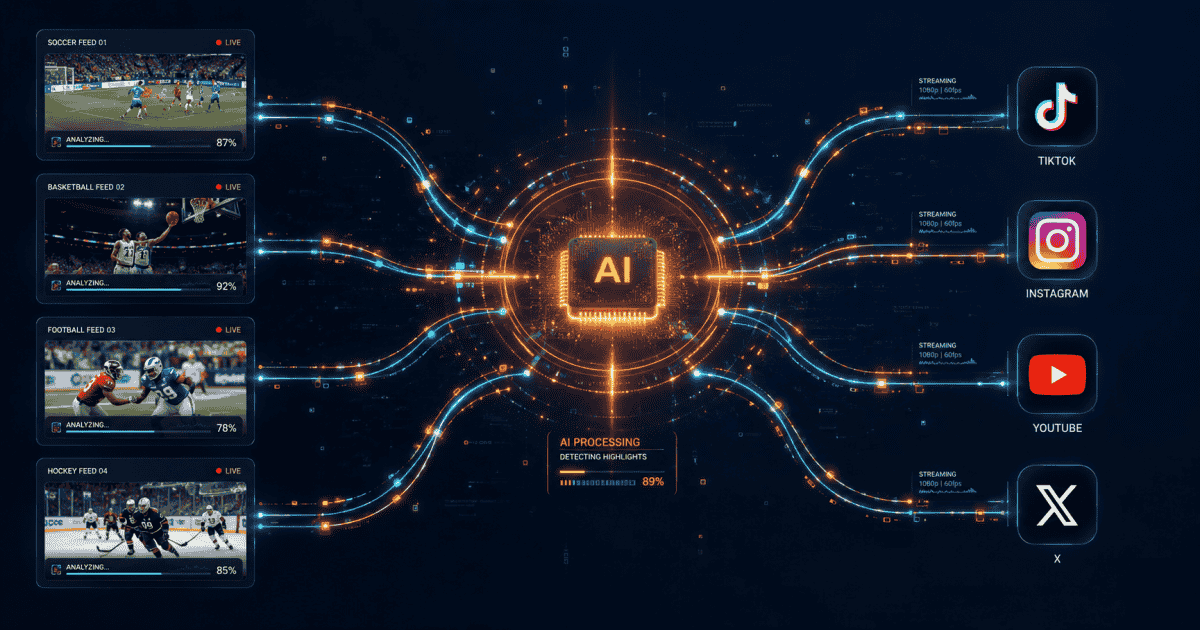
AI sports highlight platforms solve this by detecting key moments in real time using computer vision, audio analysis and game context. The system watches the feed, identifies what matters (goals, saves, dramatic plays, momentum shifts, crowd surges) and generates finished clips with branding, overlays and platform-specific formatting before a human editor would finish reviewing the timestamp.
The engagement impact is direct. A clip published within 60 seconds of the live action captures significantly more reach than one posted 15 minutes later. Social algorithms reward speed and native format. A vertical 9:16 clip performs differently from a horizontal broadcast crop. AI Reframe technology handles this conversion automatically, producing vertical, horizontal and square outputs from a single source clip in one pass.
For mid-tier leagues and federations the equation is especially powerful. A regional handball federation or a second-division cricket league can now produce the same volume and quality of social content as a Premier League club. Budget no longer dictates the quality of fan engagement.
Building the Pipeline: From Live Feed to Social Feed
The operational shift is not complicated, but it does require thinking about content production differently. Instead of a post-match editing workflow, you build a pipeline that runs alongside the live broadcast.
Ingest: Your match feed (RTMP, HLS or file upload) connects to the AI platform. At Zentag this requires zero configuration. Point the feed and the system starts processing.
Detection: Multi-dimensional AI analyzes the video, audio, scoreboard and crowd sentiment simultaneously. Key moments are flagged in real time with a confidence score based on game state, crowd intensity and visual action.
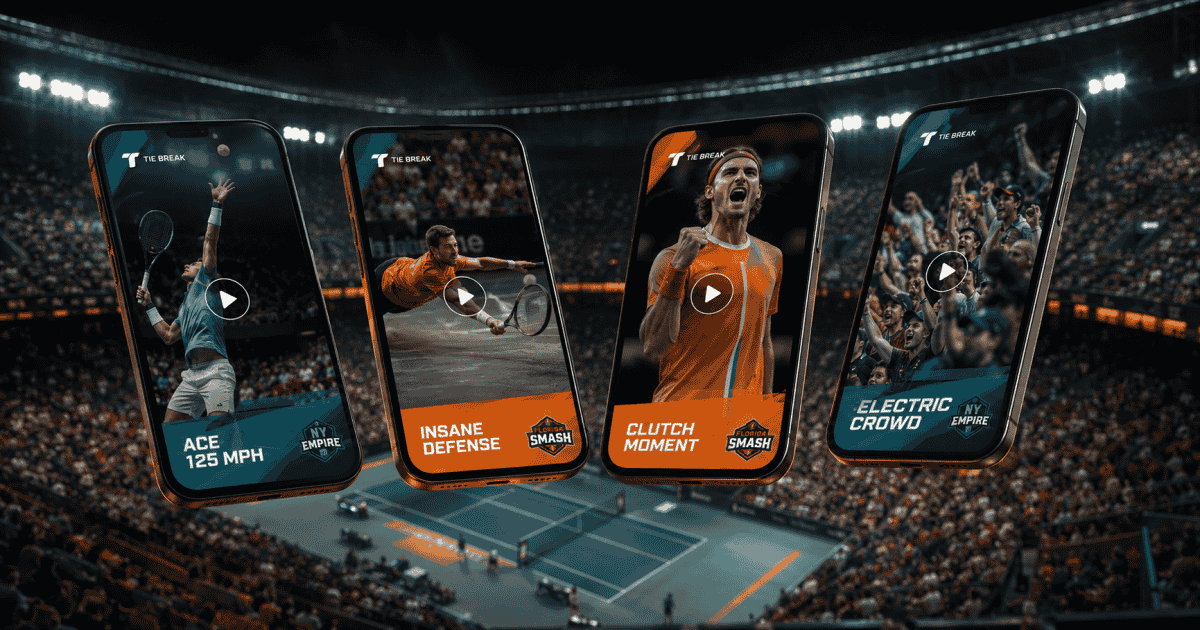
Clipping and branding: Each detected moment becomes a finished clip with your team or league branding: intro, lower-third, watermark, sponsor overlay and outro. The system applies intelligent trim points that capture the build-up and celebration rather than cutting at the exact moment of action.
Reformatting: Every clip is automatically produced in multiple aspect ratios. Horizontal 16:9 for YouTube and your website. Vertical 9:16 for Instagram Reels, TikTok and YouTube Shorts. Square 1:1 for legacy feeds. All from a single source clip, no re-editing required.
Distribution: Clips land in your publishing queue or push directly to your CMS. The Smart Live Recap capability goes further: it assembles a rolling narrative summary of the match as it unfolds, so fans tuning in late get an instant catch-up reel rather than a static scorecard.
The entire pipeline produces 15 to 30 clips per match. A weekend with 10 matches generates 150 to 300 social-ready assets without additional editorial headcount. That volume is what moves the engagement needle from "we posted a highlight" to "we owned the conversation on every platform."
Measuring What Matters
Fan engagement is only useful if you can tie it to outcomes. The organizations getting the most from AI video track three layers of metrics.
Speed metrics: Time from live moment to published clip. The target is under 60 seconds. Anything over five minutes means you are competing with fan accounts and aggregators rather than leading the conversation.
Reach metrics: Total impressions, unique viewers and share rate per clip. AI-generated clips should consistently outperform manually edited content on reach because they are published faster and formatted natively for each platform.
Conversion metrics: The downstream impact on the numbers that fund the operation. Ticket sales, merchandise purchases, streaming subscriptions, sponsor activations. The link is often indirect: a fan sees a clip on TikTok, follows the team account, downloads the app, buys a match pass. Tracking this chain requires attribution infrastructure, but the directional data is clear. Organizations publishing more social video see higher growth in owned-platform engagement and direct revenue.
The common mistake is measuring only production output (clips per match) without connecting it to audience growth. The goal is not volume for its own sake. The goal is volume at speed in the right format on the right platform, which is what drives the engagement metrics that matter. As broadcasters adopting AI highlights have found, the production efficiency is the enabler, not the end state.