
What Media Asset Management Means in Sport
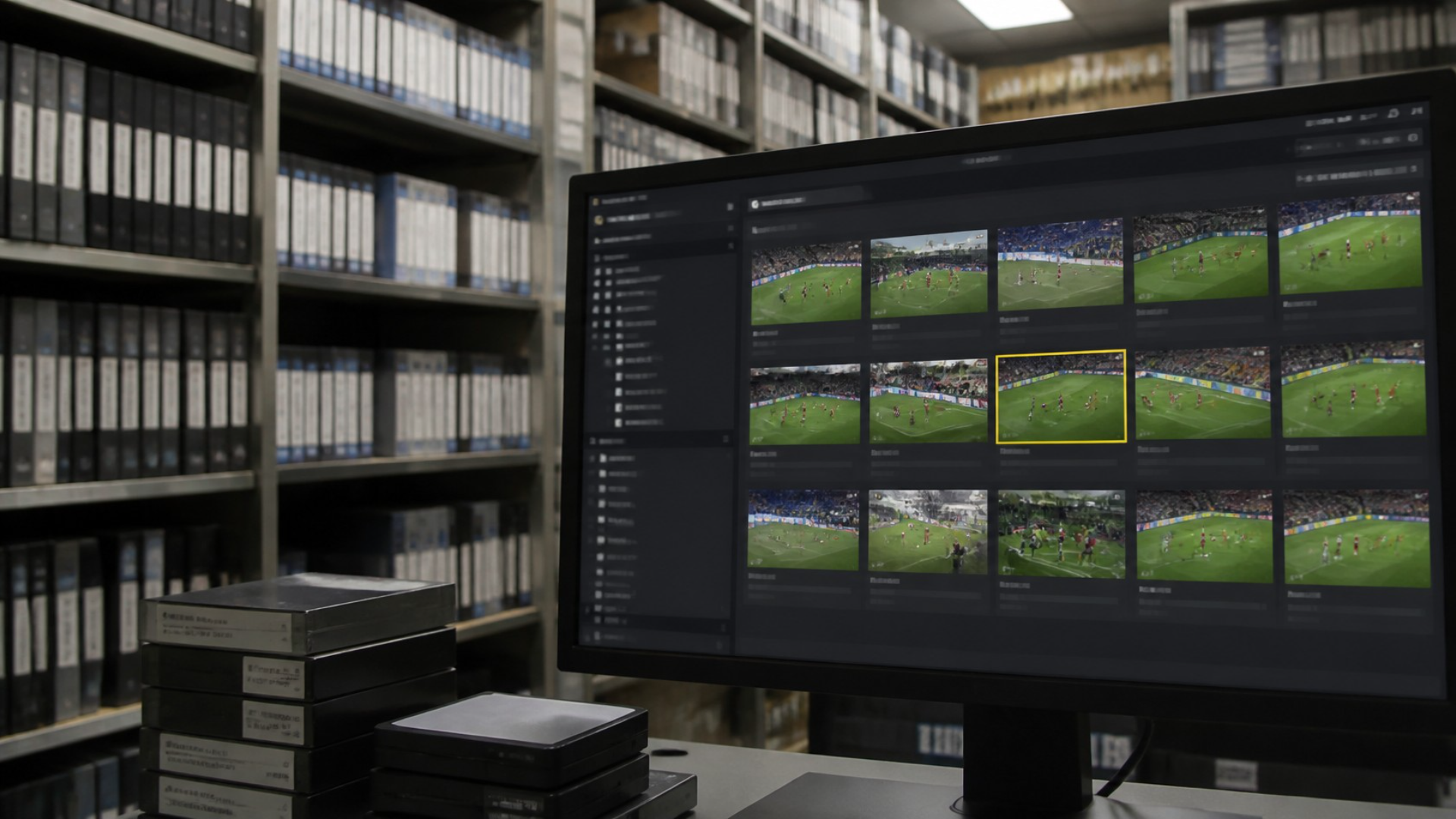
Media asset management, or MAM, covers how video is stored, described and found. In most industries that means files, folders and a few tags per asset. In sport, one match holds hundreds of moments someone will want later: a goal, a save, a celebration, an answer in the press conference.
A sports MAM has to describe footage at the level of the moment. A file named after the fixture tells an editor which game it is. It does not tell them where the 87th-minute winner is, who scored it or what the coach said about it afterwards.
Why Sports Archives Are Hard to Search
Leagues and federations often hold footage from many seasons on tape, hard drives and old servers. Much of it was logged by hand, if at all, and naming conventions changed every few years. Finding a specific moment means knowing who to ask or scrubbing through hours of video.
The archive ends up as a large asset that rarely earns anything. Editors reuse the same few famous clips because those are the ones they can find.
Indexing by Moment, Player and Spoken Word
AI indexing reads the footage itself. It marks events such as goals, points, wickets or finishes, identifies players where the footage allows it, reads on-screen graphics and transcribes speech from commentary, interviews and press conferences. Each moment becomes a searchable entry with time codes.
Zentag AI's Archive Media Management applies the same detection used on live games to historical footage, so live and archive content share one index. Transcript clipping extends that to interviews and podcasts. For more on this layer, see why metadata is the real foundation of every sports video product.
What a Searchable Archive Makes Possible
Licensing Footage to Partners
Documentary producers, broadcasters and brands license archive footage when they can find and clear it quickly. A searchable index lets a rights holder answer a licensing request in minutes and price it with confidence.
Anniversary and Throwback Content
Every season brings anniversaries, retirements and rematches. With an indexed archive, a social team can pull every past meeting between two clubs, or every goal by a retiring player, on the day the news breaks.
Sponsor and Commercial Packages
Archive series give sponsors something to attach to outside the live season. A searchable library makes those series cheap to produce on a regular schedule. Our piece on sponsor inventory in AI highlights covers how that inventory is sold.
What to Look for in Media Asset Management Software for Sport
Moment-level search across live and archive footage, by player, event, team and phrase.
Rights information attached to each asset, so editors know what can be licensed and where.
Clip export in the formats partners need, including 9:16 and 1:1 for social.
An API, so partners and internal tools can query the archive directly.
Ingest for both live feeds and bulk uploads of older footage.
Who Owns the Archive
Leagues and federations hold the rights to their archive footage. Broadcasters license live coverage for a set term, but the long-term value of the archive stays with the rights holder. That makes archive management a commercial question for the league, and the index is part of the asset.
Getting Started With One Season
Indexing an entire archive at once is rarely the right first step. Start with one competition or one recent season, test the search with the editors who will use it, and track how often clips from it get published or licensed. A pilot on a single season shows what the rest of the archive is worth. Talk to us about an archive pilot.