
The Sponsorship Model Built for Broadcast Doesn't Scale to Where Fans Actually Watch
Sports sponsorship has always been built around scarcity: a limited number of pitch-side boards, a jersey patch, a handful of broadcast ad breaks. That scarcity is what made the inventory valuable, and for decades it worked because the broadcast was where the audience was.
That's no longer the whole picture. YouGov data cited by the European Sponsorship Association puts the share of fans aged 18 to 24 who prefer highlight clips over full games at 34 percent, and the sports media rights market itself is projected to keep growing toward roughly $78 billion by 2030 according to Ampere Analysis, even as rights holders face constant pressure to diversify revenue beyond the broadcast deal itself. Every dollar of that rights growth still funds a broadcast-shaped sponsorship model: a logo that appears during the match and nowhere else.
The gap is what happens to that logo once a moment leaves the broadcast and becomes a clip. A pitch-side board is visible for the ninety seconds a wide shot happens to catch it. A jersey sponsor gets whatever screen time the player wearing it does. Neither travels reliably into a 15-second vertical clip published to Instagram three minutes after the goal, which is where an increasing share of the audience actually experiences that moment. The highlight is the most-consumed unit of sports content today, and for most organizations it's also the one with the least deliberate sponsor design.
What a Sponsorable Highlight Actually Looks Like
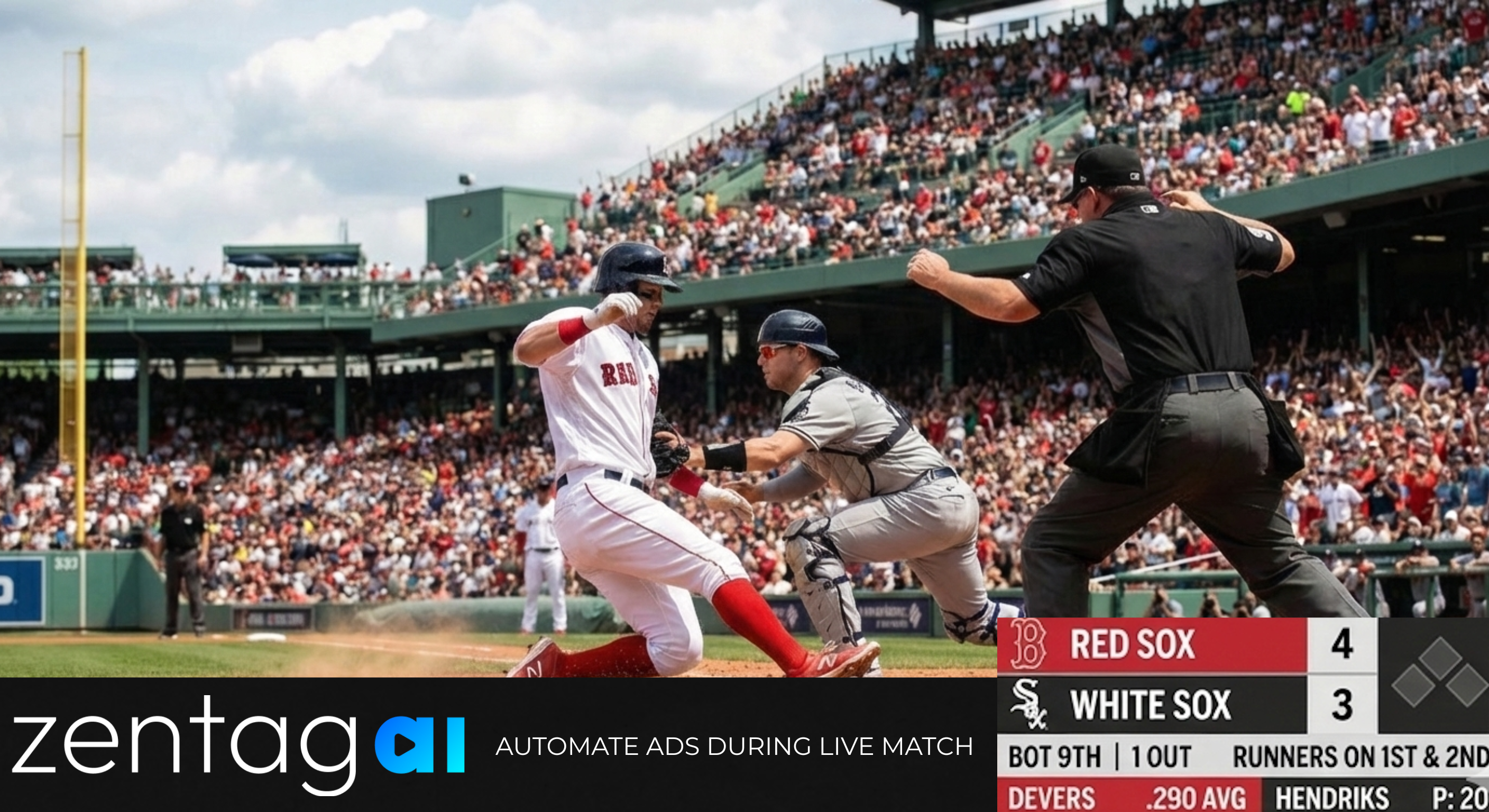
The clearest existing proof that this model works commercially comes from outside a highlights vendor. Brentford FC partnered with sports-data company Genius Sports to build augmented, sponsorable highlight clips using real-time player tracking. Rather than a static logo, the club's stadium sponsor Gtech is placed contextually: the system detects a shot in real time and displays the sponsor's logo above the goal at that exact moment, alongside shot speed and player data, in both the in-stadium replay and the clip published to social media afterward.
The principle worth taking from that example isn't the specific graphic or the data-tracking setup behind it. It's that the sponsor placement is triggered by the same event-detection layer that produces the highlight itself, not added afterward by an editor. The European Sponsorship Association's coverage of the partnership makes the commercial case directly: contextual, moment-triggered placement drives better brand recall and better CPMs than a logo that's simply present for the duration of a broadcast, because the sponsor is associated with the instant fans are most engaged, not with ambient screen time.
That's the same shift our piece on context in AI highlights makes about audiences: a fact placed at the moment it matters carries more weight than the same fact sitting in the background the whole time. Sponsorship inventory follows the same logic, and it doesn't require a separate real-time tracking integration to build. The event-detection layer inside Zentag's AI Sports Video Highlights already scores and tags every moment as part of clipping and branding. That's the same signal a moment-triggered sponsor placement runs on.
Four Places Sponsor Inventory Actually Lives Inside the Zentag Pipeline
Once you look at a highlights pipeline through this lens, the available inventory is larger than most organizations are currently using, and each one maps to a step Zentag already runs.
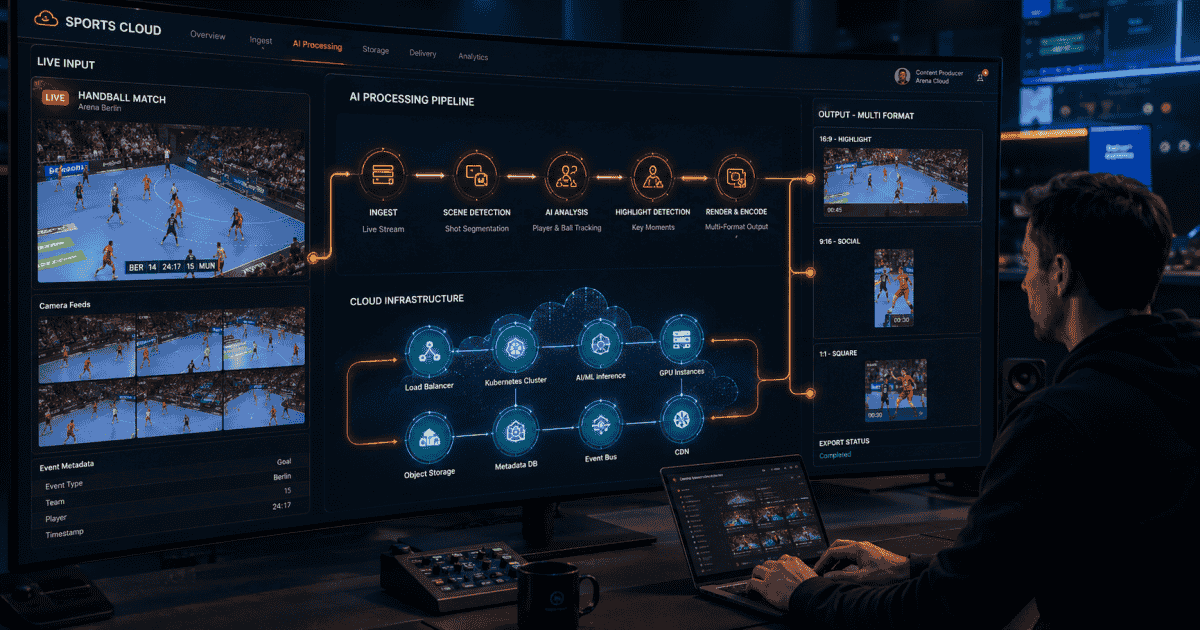
Branded overlay real estate. Every clip AI Sports Video Highlights produces already carries an intro bumper, lower-third scoreboard, watermark and outro card as part of the standard branding step. These slots are sponsor-ready by default. The question is usually whether an organization has sold them yet, not whether the pipeline can support them.
Moment-triggered placements. Instead of a fixed logo position, a sponsor badge can be tied to a specific event type: a "Save of the Match" tag that only appears on the highest-significance goalkeeping clip of the game, or a shot-speed graphic that appears exactly when a shot is detected, the way Gtech's logo does in the Brentford example. Zentag's detection layer already scores every moment for significance as part of clipping, which is the same signal a moment-triggered placement runs on. This inventory is more valuable per impression because it's scarce and tied to a moment fans are already paying attention to, rather than present in every frame.
Coverage-depth inventory. Manual highlight production concentrates sponsor visibility on marquee fixtures because that's where the editing budget goes. Because AI Sports Video Highlights and Smart Live Recap generate a full set of clips and a recap for every match, not just the headline game, sponsor placements exist across the entire competition rather than a handful of televised fixtures. A federation running 15 to 20 matches a weekend can sell sponsor presence across all of them, not just the one game that got a broadcast slot.
Archive-driven packages. An archive package is a themed compilation pulled from your historical footage instead of a single match: "every goal this player has scored this season," "every match-winning save," "every meeting between these two rivals across three years." Assembling that by hand means an editor scrubbing through hundreds of hours of old footage to find and re-cut every relevant moment, which is why it rarely gets done. Every clip Zentag generates carries metadata as it's produced: player, team, moment type, competition, significance score. Archive Media Management turns that metadata into a searchable library, so a compilation like this becomes a search query instead of a multi-day edit. A sponsor's branding on "every derby goal for the last three seasons" is a fundamentally different, higher-value pitch than a logo on one clip, and it's only possible once the archive is searchable rather than just stored.
Why Automated Inventory Is Worth More Per Impression
Automation doesn't just produce more sponsor slots. Three things change the value of each individual placement, not just the count.
Speed keeps inventory from going stale. A sponsor badge that publishes inside the same 60-second window as the clip itself reaches the audience while the moment is still being talked about. A logo added in a manual edit that goes out 15 minutes later reaches whatever audience is left once the conversation has moved on.
Context improves recall. As the Brentford example shows, a placement tied to the moment of action performs better than the same logo present for the full duration. This is a direct extension of the argument that context makes a clip worth watching: it also makes a sponsor placement worth remembering.
Depth turns niche inventory into a portfolio. A brand that couldn't previously afford placement on marquee, nationally broadcast fixtures can buy presence across a full competition's worth of automated content instead, which is a different and often more efficient buy for a regional or category-specific sponsor.
The result is inventory an organization can report on with real numbers: exposure time per placement, impressions per clip, reach per moment type, because the same metadata layer that powers detection and branding also powers measurement.
Building Sponsor Rules Into an Existing Highlights Pipeline
None of this requires a new production workflow. It requires treating overlay and archive metadata as inventory to be sold, not just a branding step to be automated once and left alone.
Map your available slots. List every place branding currently appears in your pipeline: intro, lower third, watermark, outro, and any moment-specific graphics. Each is a sellable unit once it's identified as one.
Tie premium placements to moment type or significance score. Rather than treating all overlay space as equal, reserve the highest-visibility slots (a "Play of the Match" tag, a milestone card) for the clips your detection layer already scores highest, so sponsors are buying association with the moments most likely to be watched and shared.
Extend inventory into the archive, not just live output. If your pipeline already tags clips by player, team and moment type for search and reuse, that same tagging is what makes a themed sponsor package possible without a manual edit. This is where organized, AI-tagged archive footage turns from a storage problem into a sales asset.
Build reporting into the placement, not around it. Because every clip already carries metadata, exposure reporting (which clips a sponsor's badge appeared in, how many times, across which moment types) can be generated from the same data the pipeline uses for detection and branding, rather than compiled manually after the fact.
Start with the branding slots you already have, then layer in moment-triggered inventory. Selling the intro, lower third and outro is close to a configuration change for most organizations already running an automated pipeline. Moment-triggered and archive-driven inventory are the next tier, and they require the pipeline to understand what's happening in each clip, not just where to put a logo.
What This Changes for Rights Holders and for Brands
For rights holders, this is a revenue line that scales with match volume and content depth rather than with headcount. A lower-division game that previously generated no sponsor-visible content at all can now carry the same branded overlay package as the flagship fixture, at no additional production cost.
Most rights holders are built to run competitions, not ad-sales operations. Bringing a sponsor in for a season is a sales conversation, and most organizations can have that conversation. Keeping the sponsor past the first renewal is a different problem: can you actually show them what they got. That's the harder half of the job, and it's the one this kind of inventory is built for, since every placement comes with its own impression count instead of a rough estimate produced at contract time.
It also runs on the match schedule, not on office hours. A fixture that kicks off at midnight local time still gets the same branding, the same moment-triggered placements and the same reporting as a primetime game, because none of it waits for an editor to log in the next morning.
For brands, it answers the complaint the European Sponsorship Association's coverage raises directly: as media costs rise, sponsors increasingly want measurable, contextual activations instead of a static logo that may or may not get meaningful screen time. Inventory that's tied to a detected moment, reportable by impression, and available across an entire competition rather than one broadcast fixture is a more accountable buy than the sponsorship model built for linear television.
None of it requires new infrastructure. The branding templates in AI Sports Video Highlights, the moment-level significance scoring the detection layer already runs, and the tagging that powers Archive Media Management are the same systems already producing your clips. Sponsor inventory is what you get when you decide to sell the layer that's already there.