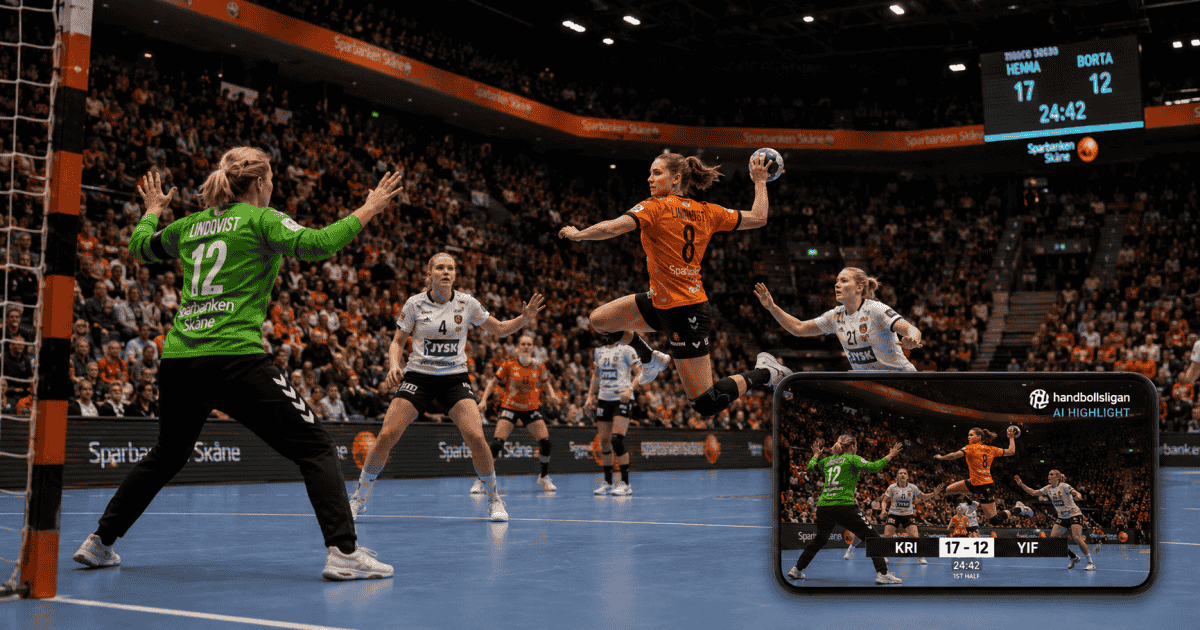

Why Vertical Video Matters for Sport
Most sports video is now watched on a phone held upright. At the SVG Cloud & Content Workflows Summit in October, panellists said 90% of FOX's sports audience consumes sport on mobile. A 16:9 clip on a vertical screen sits in a thin strip with space above and below it, while Shorts, Reels and TikTok are built around full-screen 9:16 video.
For rights holders, vertical video is now part of how fans follow a competition between broadcasts, and in many cases instead of them.
The Production Problem
Every vertical clip starts as broadcast footage shot for a 16:9 screen. Turning it into 9:16 means choosing what to keep in a frame about a third of the width, shot by shot. Done by hand, that doubles the editing work for every clip at the moment the team is busiest.
Most rights holders end up producing vertical content for their headline games and skipping the rest of the fixture list.
How AI Produces Vertical Video at Match Volume
Clips Cut From the Live Feed
Zentag AI ingests the live stream over RTMP, SRT or HLS and detects moments from the video and audio as they happen, with or without a data feed.
Reframed to 9:16 as They Are Cut
AI Reframe follows the ball and the players involved and produces 9:16 and 1:1 versions next to the 16:9 original in one pass. Our piece on how AI reframing saves broadcasters hours covers the time saved.
Published During the Game
Vertical clips go out while the match is still on, when fans are most likely to watch and share them, and the same pipeline runs for every game in the round.
What to Publish in 9:16
Goals, points and big plays within minutes of happening.
Reactions and celebrations, which suit a tight vertical frame.
Short recaps for fans who missed the game. See automated sports recaps.
Interview and press conference clips, cut from transcripts with transcript clipping.
Archive moments tied to anniversaries and rematches.
Vertical Video Specs at a Glance
The standard vertical format is 9:16 at 1080 by 1920 pixels for YouTube Shorts, Instagram Reels and TikTok. Keep captions and graphics away from the top and bottom edges, where each platform places its own buttons and text. Our guide to optimising highlights for Shorts, Reels and TikTok covers each platform in detail.
Getting Started
Start with one competition. Publish vertical clips during live games for a few rounds and compare views and shares with your 16:9 posts. Book a demo to see vertical clips produced from your own feed.